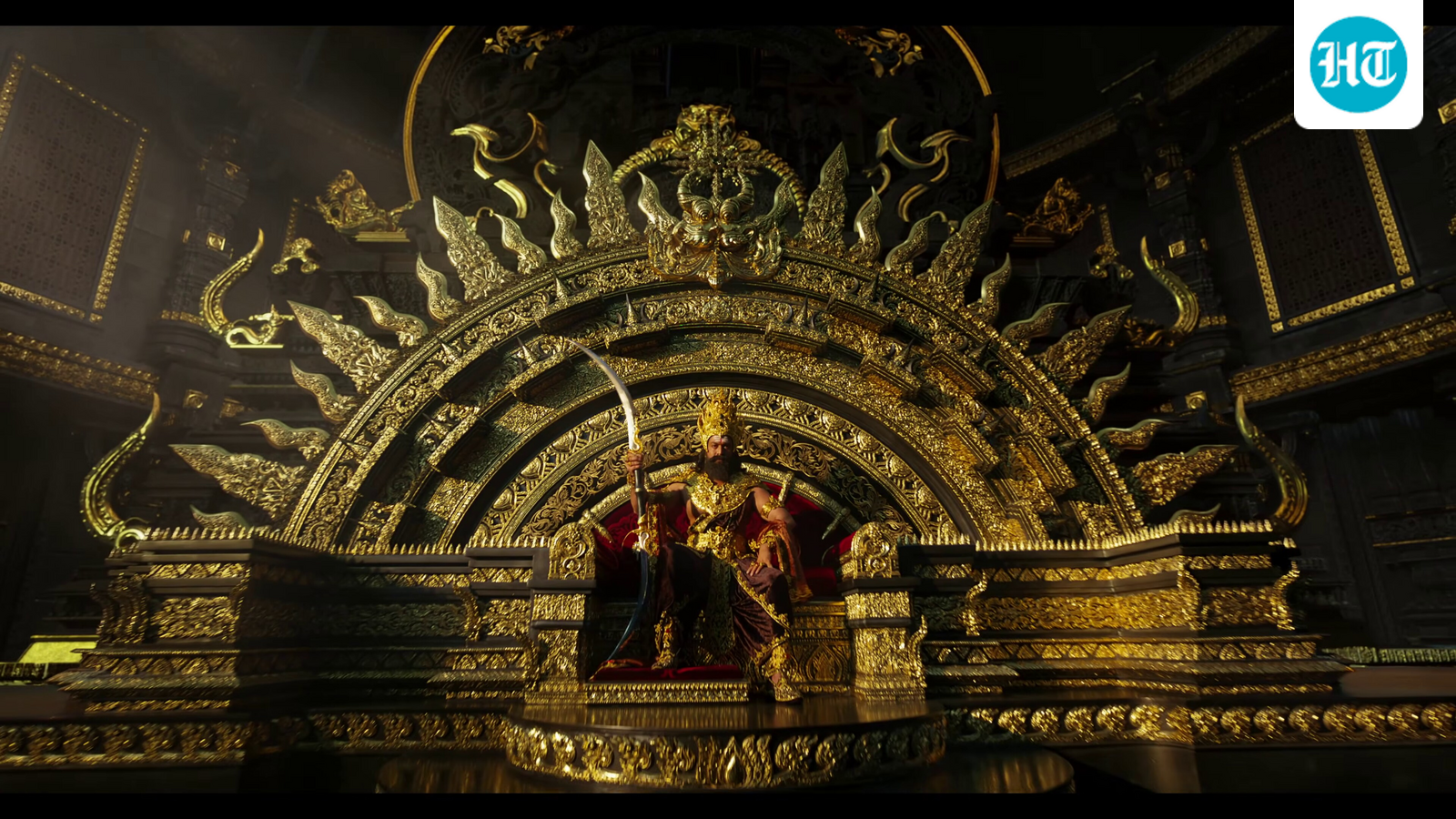
Ravana's throne in Ramayana was made out of 24K gold, cost ₹1 crore; Surpanakha's chariot cost ₹1.5 crore, reveals art director
Here's the latest box office buzz making the rounds:
Nitesh Tiwari’s Ramayana is the most expensive Indian movie ever made, with a reported budget of ₹ 1600 crore rupees for Part One. Much of the budget has been spent on creating the extraordinary visuals through VFX and CGI. But a large part of it also went into the grand production design. In a recent interview, the movie’s art director opened up that, contrary to popular belief, grand items like Ravana’s throne, the flying Pushpak Vimana, and even Surpanakha’s chariot were all real models, painstakingly built at great cost.
Adding to this, Yash plays Ravana in Nitesh Tiwari's Ramayana. Ramayana art director opens up on Ravana’s throne One of the most prominent sequences in Ramayana is when Ravana conquers Lanka and takes over the rule from Kuber. A scene shows the newly anointed king creating a throne of gold and sitting on it as he looks at his subjects. Ramesh Andhale, the art director of Ramayana, told Prabhat Khabar that the grand throne took the movie’s art design department four months to make. Ramesh added that at first, a clay model of the entire throne was created based on the designs, following which the team constructed the throne using fibre. But what added to its visual appeal was that real 24-karat molten gold was used in its decoration. According to Ramesh, gold leafing was applied to the throne, and the final product cost around ₹ 1 crore rupees.
Meanwhile, Ramesh added that similar painstaking attention to detail was done for almost all of the movie’s major objects and sets. He opened up about the gold-plated chariot that carried Surpanakha (played by Rakul Preet Singh). The chariot appears in only one scene when Surpanakha visits Lord Rama and Lakshman in the Panchavati forest. Yet, the production design team went all out in its making. Ramesh shared that the chariot took three months to complete, as the team had to make it functional while getting the balance right between functionality and aesthetics. It cost ₹ 1.5 crore rupees to make, according to him.
Notably, Produced by Namit Malhotra’s Prime Focus Studios in collaboration with DNEG and Yash’s Monster Mind Creations, Ramayana is planned as a two-part movie. The movie stars Ranbir Kapoor as Lord Rama, Sai Pallavi as Sita, Yash as Ravana, Ravie Dubey as Lakshman, and Sunny Deol as Lord Hanuman. The first part rolled out worldwide on November 5, 2026, while the second part is set for Diwali 2028.
As per the latest buzz, Abhimanyu Mathur is Deputy Editor, Entertainment at Hindustan Times. With almost 15 years of experience in writing about everything from films and TV shows to cricket matches and elections, he inhales and exhales pop culture and news. Currently, he watches movies and TV shows and talks to celebrities for a living, while occasionally writing about them as well. A journalism graduate of Delhi College of Arts and Commerce, Delhi University, Abhimanyu began his career with Hindustan Times at the age of 20, swapping classrooms for newsrooms at an early age. He began his journey in the early days of digital journalism, later switching to the madness of print journalism. Work has led him to far off places like Japan and Jordan, as well as to the interiors of Haryana and the Indo-Pak border. He dabbled in city reporting in places like Meerut, Gurgaon, and Delhi, covered the Olympics and Cricket World Cups, before finding his calling in entertainment and lifestyle during the pandemic. A Rotten Tomatoes Certified Movie Critic, he is equally at home covering stories on ground as he is interviewing celebrities and studios, and sometimes prefers to shepherd teams in delivering traffic through the day. Even as his role has evolved from reporter to supervisor over the years, his first love remains writing (and of late, talking on camera). With a good understanding of cinema and its trends, and a keen eye for detail, he continues to spark conversations around showbiz for readers around the world. Read More
Source: Hindustan Times