Amid Eetha Marathi accent controversy, Shraddha Kapoor says she doesn't ‘handle’ criticism, barely checks her phone
Here's the latest update from the Bollywood world:
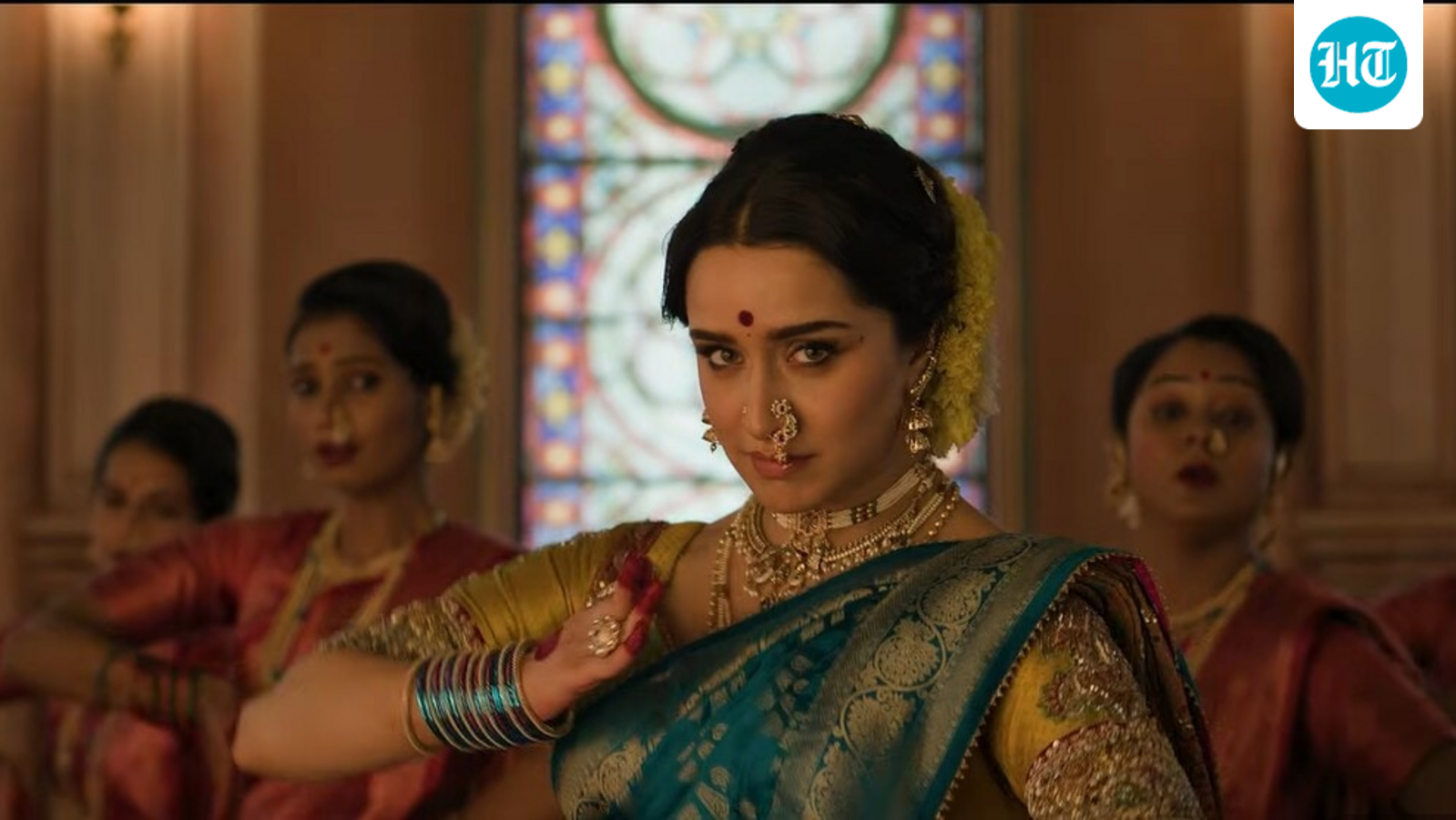
Shraddha Kapoor has opened up about her approach to criticism after facing online scrutiny over her Marathi dialogue delivery and accent in the trailer of her soon-to-release movie, Eetha . The star essays the role of legendary Lavani and Tamasha performer Vithabai Narayangaonkar in the movie.
Adding to this, Shraddha Kapoor plays legendary Lavani and Tamasha performer Vithabai Narayangaonkar in Eetha. During a recent Ask Me Anything session on social media, a fan asked Shraddha how she handles criticism. The star shared her trick is to stay away from her phone, which is why she pays little attention to negativity and prefers to focus on her work.
Meanwhile, Shraddha shared, "I actually don't handle criticism. What's there to handle in that? I can't even handle my WhatsApp." The star added that her habit of staying away from her phone has helped her but has also led to her getting scoldings from directors. She shared, "I don't even have a manager, nor am I affiliated with any agency. My friends, directors, and producers keep scolding me that I don't check my phone. I'm not interested in handling any criticism. All I want to do is work, and more and more work. That's it."
Notably, Eetha is a biographical drama directed by Laxman Utekar. Rooted in Maharashtra's traditional Tamasha and Lavani dance forms, the movie is inspired by the life of Vithabai Narayangaonkar. It is produced by Dinesh Vijan and Laxman Utekar and presented by Maddock Films and Kathputli Creations. The movie features music by Ajay-Atul and also stars Mohammed Zeeshan Ayyub and Siddharth Jadhav in pivotal roles. It is scheduled to rollout in cinemas on December 4, 2026.
As per the latest buzz, Vithabai Narayangaonkar was one of Maharashtra's most celebrated Tamasha and Lavani performers. Born on July 1, 1935, in Pandharpur, she grew up in a family of folk artistes. Her grandfather, Narayan Khude, established a travelling Tamasha troupe, which was later run by her father and uncle. Vithabai began performing at a young age and went on to become a prominent name in Maharashtra's folk theatre circuit.
In further updates, She was widely admired for her stage presence and dedication to the art form. She was honoured with medals by the President of India in 1957 and 1990 for her contribution to Tamasha. She also came to be known as 'Tamasha Samradini' or the Empress of Tamasha. The Maharashtra government later instituted the Vithabai Narayangaonkar Lifetime Achievement Award in her memory in 2006. She died on January 15, 2002.
On top of that, Vibha Maru is an Assistant Editor with Hindustan Times Entertainment, based in Delhi. With a decade of experience across digital and print media, she covers Bollywood, Hollywood and web shows. A self-confessed cinephile who breathes Hindi cinema, Vibha can often be found sacrificing sleep after binge-watching films and web series. Though she holds a Commerce degree, she discovered her true calling in journalism after enrolling at the Indian Institute of Mass Communication (IIMC). She began her career covering Delhi's cultural scene, food, nightlife, concerts, and city life at The Times of India, before moving into full-time entertainment journalism with India Today. At India Today, Vibha interviewed some of the biggest names in Bollywood and television while carving a niche for herself through movie reviews, opinion pieces, nostalgic features, star interviews, and trend-driven stories. She later brought her storytelling and editorial expertise to The Indian Express, where she continued to deepen her understanding of cinema through long-form entertainment explainers, retrospectives and feature writing. Now, as Assistant Editor at Hindustan Times Entertainment, Vibha continues to chronicle the world of movies and pop culture. Her work spans breaking entertainment news, exclusive interviews, star features, and stories that capture the conversations shaping Indian cinema. Read More
Source: Hindustan Times