Delhi Police avoid name tags at Jantar Mantar protests to prevent social media targeting
Here's the latest protest news from across India:
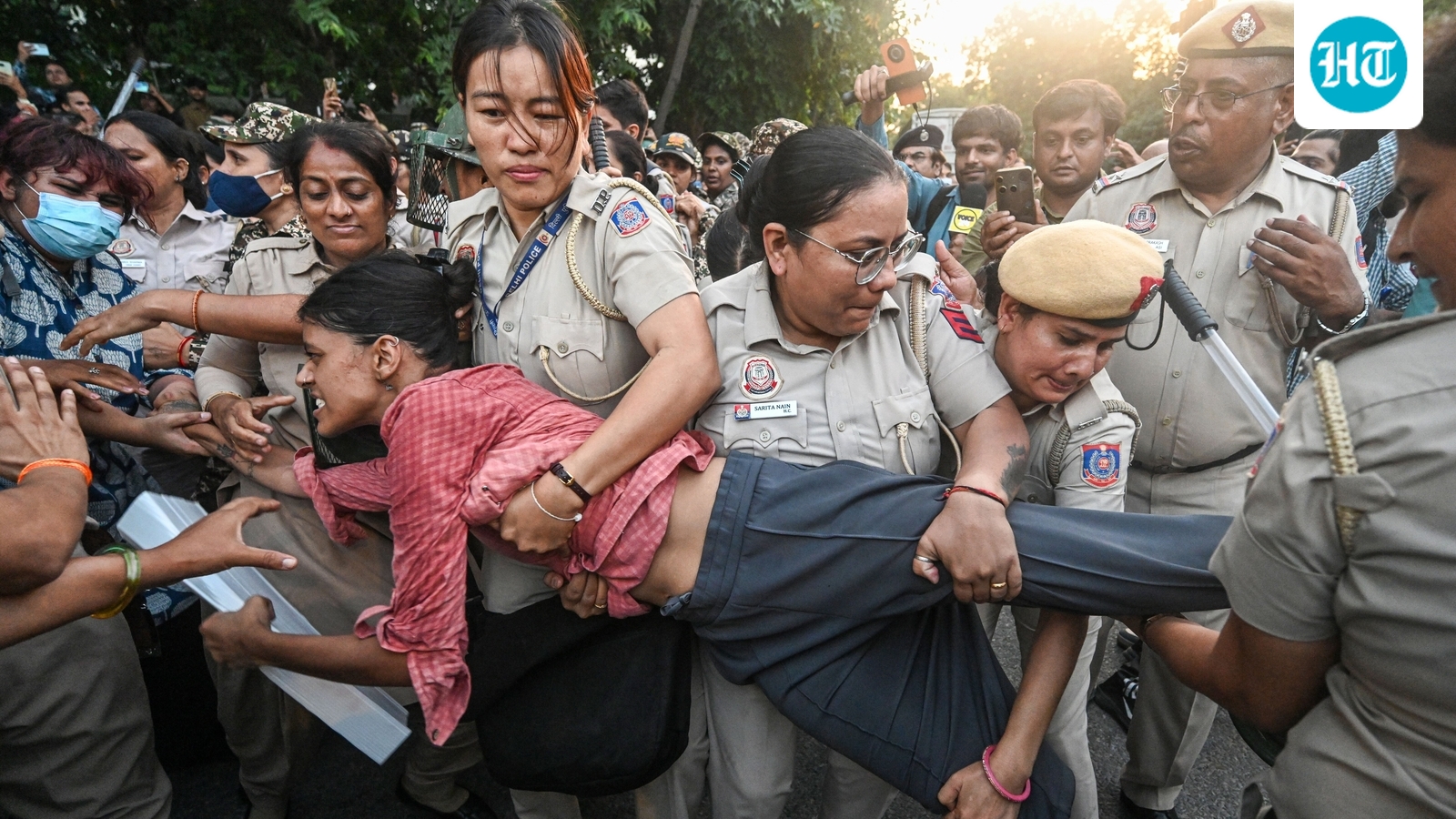
Police deployed at Delhi’s Jantar Mantar for protests against Chief Election Commissioner (CEC) Gyanesh Kumar over alleged irregularities in the Special Intensive Revision (SIR) of the electoral rolls did not wear name tags as a “deliberate measure” to prevent them from being targeted and identified on social media, officials aware of the matter shared. The measure was adopted because personnel were targeted on social media following the July 20 violence during the Cockroach Janta Party (CJP) march, they added.
Adding to this, Members of the All India Students’ Association (AISA) and other student organisations take part in a protest march towards Jantar Mantar amid heavy security deployment on Sunday, October 4, 2026. (Sanchit Khanna/HT photo) The CJP called the march after weeks of protests and a hunger strike at Jantar Mantar. Thousands of demonstrators attempted to march to Parliament demanding the resignation of the then Union education minister Dharmendra Pradhan over examination paper leaks. Police used tear gas and baton-charged to disperse the crowd as protesters attempted to breach multiple layers of barricades. Videos circulating on social media appeared to show several protesters being beaten. The Delhi Police maintained that force became necessary after demonstrators turned violent.
Meanwhile, On day one of the protests against Kumar on Friday, many protesters photographed and filmed police personnel questioning why they were not wearing name tags. In videos circulated on social media, some police personnel shared their tags had fallen off amid the commotion. Others shared they had forgotten to attach them. Some shared they had deliberately removed the tags to prevent them from coming off. Many refused to offer any explanation.
Notably, Officials aware of the matter shared this deliberate measure was part of lessons learnt from the July 20 protests when police personnel were targeted and identified on social media.
As per the latest buzz, Top officers directly involved in crowd management told their seniors in review meetings of crowd handling during the July CJP protests that they and their families were identified and targeted on social media for doing their jobs. “Many officers shared their families were called out by friends or in social circles. Some officers even reported that their families had been deliberately targeted by colleagues at work and through memes on social media,” shared a police officer aware of the deliberations at the review meetings.
In further updates, The officers involved in crowd management were subsequently assured that no action would be taken against anyone for removing name tags if they were performing their duty within the law. “While most IPS [Indian Police Service] officers, who are easily identified by the public, chose to retain their tags at Jantar Mantar this time, many junior personnel were allowed to be on the ground without wearing their tags,” the officer shared. He added that many influencers were posing as media personnel and deliberately targeting police officers.
On top of that, Security forces have had a no-name-tags strategy in Left Wing Extremism-affected areas, the northeast and Jammu and Kashmir. In photographs of anti-insurgency operations, the faces of special forces personnel are blurred.
The removal of tags in Delhi drew criticism as police were accused of excesses while quelling the protests in July. Experts shared there are no written rules mandating whether personnel must wear or remove their name tags. It has long been an operational practice in conflict zones to prevent them from being identified and targeted.
Source: Hindustan Times