‘SOP concept a mirage’: SC seeks Centre’s reply on metro station closures during CJP protest
Here's the latest protest news from across India:
The Supreme Court on Thursday sought the Centre’s response to a plea raising important constitutional questions over the closure of 17 Delhi Metro stations during the July protests led by the Cockroach Janata Party (CJP), including whether a public utility can be shut without a specific statutory power or formal order.
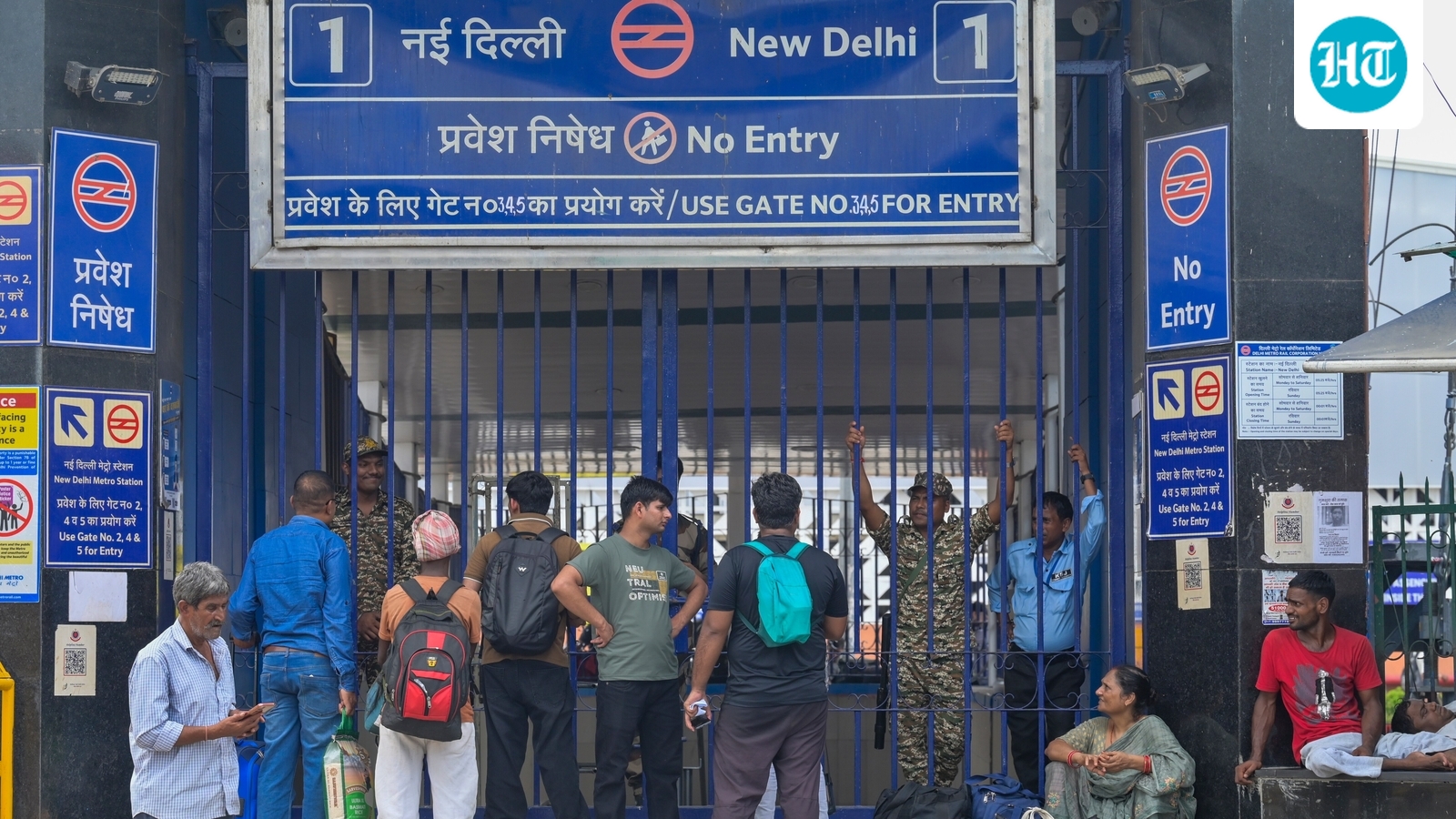
Adding to this, Passengers face inconvenience and travel disruptions after the closure of New Delhi Metro Station due to heightened security arrangements amid the CJP protest on July 24. (RAJ K RAJ /HT PHOTO) A bench, comprising Chief Justice Surya Kant and justices Joymalya Bagchi and V Mohana, issued notice on the plea, which argued that the shutdown violated the constitutional rights of the public at large and failed the tests of proportionality and least restrictive means.
Meanwhile, The petition contended that there was no provision under the Metro Railways (Operation and Maintenance) Act authorising the closure of Metro stations in such circumstances, and that the decision was communicated to the public through posts on “X” rather than a formal order.
Notably, “It concerns the constitutional rights of the public at large and the constitutional standards governing the shutting down of a public utility,” the counsel for the petitioner submitted, stressing that the challenge was not about the rights of the protesters but the rights of ordinary commuters affected by the shutdown.
As per the latest buzz, The lawyer argued that while the police could regulate a protest on law-and-order grounds, they could not direct the closure of a public utility without statutory authority.
In further updates, “The police can regulate a protest, but they cannot issue orders directing a public utility to be shut down,” shared the counsel, adding that there was a strong need for a standard operating procedure governing closure of Metro stations during protests.
On top of that, The bench, however, cautioned against treating an SOP as a legal prerequisite in every law-and-order situation.
“The concept of SOP is actually a mirage. When it comes to a law-and-order question, courts have deferred to the executive authority. It is only in cases when it becomes disproportionate that courts step in,” it observed.
Source: Hindustan Times