Batwara 1947 review: Shabana Azmi, Sunny Deol deliver a heart-wrenching film centered on the Partition of India
Here's the latest update from the Bollywood world:
2026 has already seen a Partition story reduce audiences to tears with Main Vaapas Aaunga . Now, we have Batwara 1947.
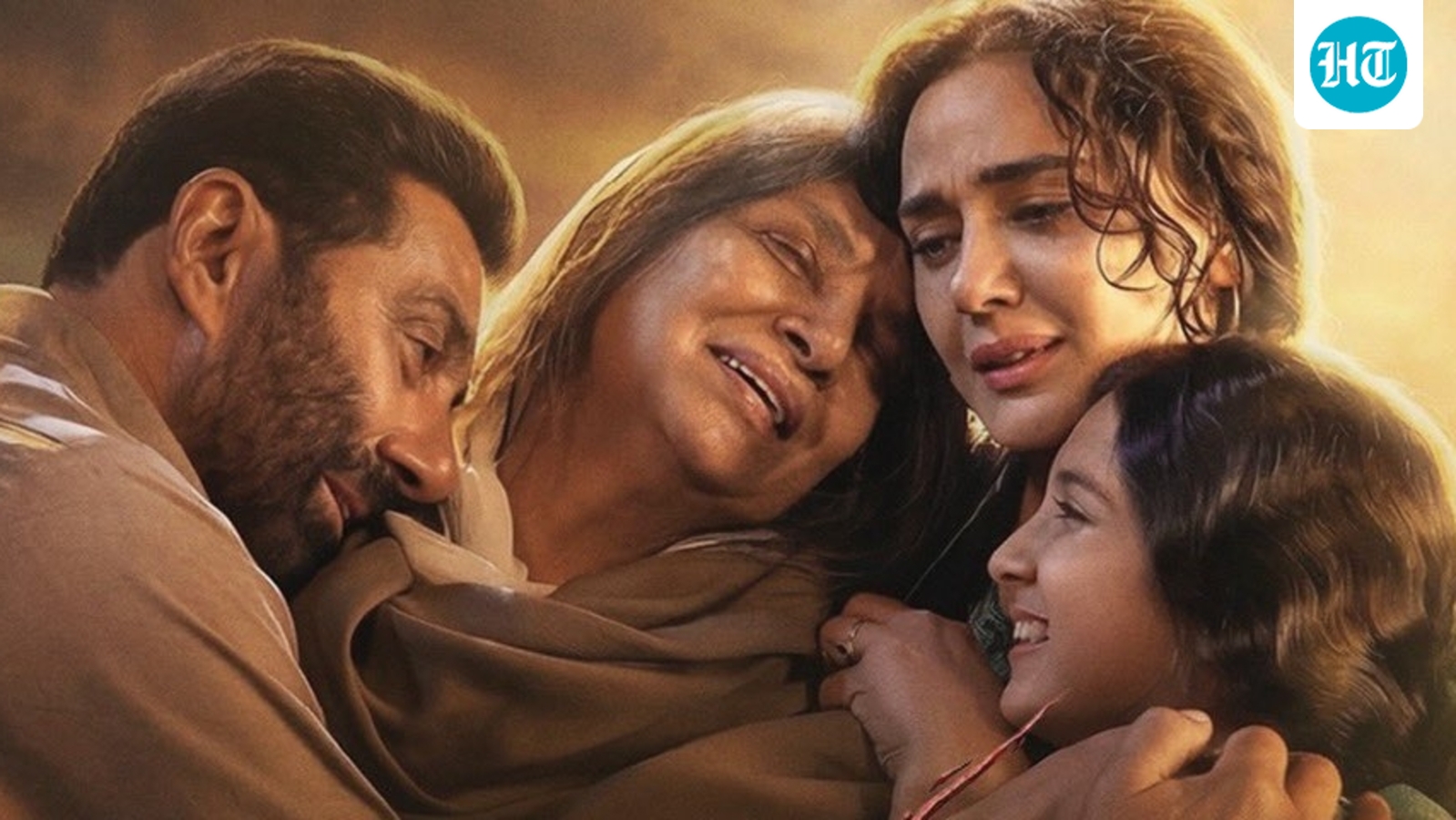
Adding to this, Batwara 1947 review: Sunny Deol, Shabana Azmi and Preity Zinta in a still from the movie. Director Rajkumar Santoshi and lead star Sunny Deol have given us classics such as Ghayal, Damini and Ghatak in the past. This time, the duo turns to the popular play Jis Lahore Nai Dekhya, O Jamyai Nai (Those who haven't seen Lahore, aren't even born yet), adapting it into a full-fledged feature movie. But does Batwara 1947 offer a fresh perspective on Partition, or does it revisit familiar territory we have already seen on screen? Let's find out.
Meanwhile, The story revolves around Sikandar Mirza ( Sunny Deol ) and his family: wife Hamida (Preity G Zinta), son Javed (Karan Deol) and daughter Tanvir (Khushi Hajare), who are forced to flee India overnight in the aftermath of Partition. They arrive in Lahore and are allotted a haveli, only to discover that it is still occupied by its previous owner, a Hindu woman named Durgavati (Shabana Azmi), affectionately called Mai by the mohalla.
Notably, The Mirzas, frustrated, try everything they can to make her leave. But Mai refuses, insisting that she is waiting for her son to return. As tensions rise, Yaqoob (Abhimanyu Singh), an aspiring politician, begins to give the conflict a communal colour, further inflaming an already volatile situation. What happens next forms the crux of the movie.
As per the latest buzz, Rajkumar Santoshi adapts the play beautifully for the big screen. Yet, there is something that keeps the movie from being perfect. Perhaps it is the old-school filmmaker in him that occasionally makes Batwara 1947 feel like either a stage play or an ’80s movie, because the pitch is often louder than it needs to be. For a story largely confined to the physical space of a haveli, the scenes sometimes carry an exaggerated quality. The confrontations are amplified, and the performances are often pitched a notch above what the material demands. It works in parts, but also prevents the movie from achieving the quiet realism that could have made its story even more affecting.
In further updates, Nevertheless, the first half of Batwara 1947 is highly engaging. For those unfamiliar with the source material, the story is likely to feel engrossing. More importantly, the movie makes you think, and think hard. For people who once called a country their home, being forced to leave it overnight, or being told that they no longer belonged there, must have been a trauma beyond our comprehension. Batwara 1947 captures those scars, reminding us that Partition was not merely about the drawing of a new border, but about the lives and homes that were torn apart by it.
On top of that, The second half begins on a slightly shaky note, as the narrative loses some of the momentum it had established in the first half. The pacing becomes a little uneven, with the music dragging down the movie at a few places. However, it soon finds its footing again, largely on the strength of its cast.
Shabana Azmi is absolutely remarkable as Mai. There is a quiet heartbreak in her performance, with every nuance carrying the weight of a woman who has lost almost everything but refuses to let go of the one thing she has left: hope. She commands attention whenever she appears on screen, making her casting one of the movie’s biggest strengths.
Source: Hindustan Times