A Tragedy in Iran Might Persuade Hegseth to Change Course
Here's what's trending across the USA right now:
Hassan Ghaedi / Anadolu / Getty July 31, 2026, 7 AM ET Share Save W hen President Trump plucked Pete Hegseth from Fox News to be his secretary of defense, Pentagon officials scrambled to get with their new boss’s pugnacious program: Lethality and battlefield swagger were in; “wokeness” and operational restraint were out. Hegseth’s subsequent purge at the Defense Department included the dramatic downsizing of staff dedicated to avoiding civilian casualties in war. They had been part of a military-wide system built up after tens of thousands of ordinary people were killed during the wars in Iraq and Afghanistan. Congress mandated some of the enhancements. But Hegseth fired or reassigned almost all of the staff working on the program.
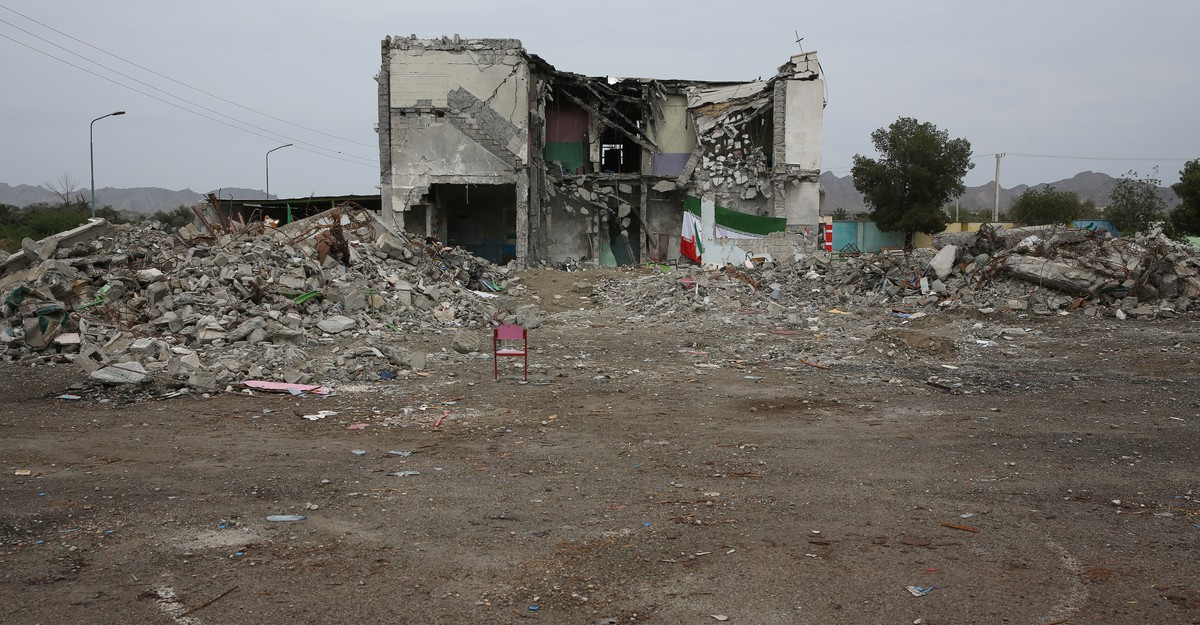
Adding to this, Now the Pentagon is considering restoring as many as half of the roles that were cut as the military reckons with the human impact of its five-month, on-again, off-again war with Iran, in particular an air strike in the first hours of the conflict that killed almost 170 people, most of them children, at a school in Minab, in southern Iran. The potential reversal, which hasn’t previously been reported, now awaits Hegseth’s signature.
Meanwhile, A Pentagon inspector-general report this spring found that the department’s deep cuts in civilian-harm protections may have violated laws designed to safeguard noncombatants. Democrats are urging the Defense Department to reverse course. Hegseth’s comments and service history suggest that he will do otherwise. A Pentagon official—who, like other officials, spoke with us on the condition of anonymity to discuss internal deliberations—shared in a note that the setup for preventing civilian harm is “currently undergoing a strategic reassessment to inform its future reorganization” and would remain in compliance with congressional requirements, but that no final decisions have been made.
Notably, H egseth, who served in Iraq and Afghanistan with the National Guard, arrived at the Pentagon early last year with a record of railing against what he characterized as unnecessary shackles on battlefield operators, such as military “jagoffs” (a play on judge advocates general, known as JAGs) and international law. His on-air advocacy for troops accused or convicted of war crimes helped forge his bond with Trump. Within months of his taking office, the Pentagon had slashed the number of total staff working to prevent and investigate civilian-casualty incidents by about 90 percent.
As per the latest buzz, Hegseth brought the same gloves-off mentality to the war in Iran, which remains in a protracted limbo that has crippled maritime commerce and thrust Persian Gulf allies into open conflict with Tehran. “No stupid rules of engagement, no nation-building quagmire, no democracy-building exercise, no politically correct wars,” Hegseth told reporters early in the conflict. “We fight to win, and we don’t waste time or lives.” Trump also has made repeated threats to strike bridges and power plants, actions that under many circumstances could constitute war crimes.
In further updates, Hegseth has shared that Tehran positions its military assets alongside civilian sites such as hospitals and schools. Iran has also struck apartment buildings and energy facilities across the Gulf and killed at least 18 U.S. troops in the region. But the strike on the school in Minab appears to have been the worst on civilians in a U.S. operation since the Gulf War in 1991. Immediately after, U.S. defense officials professed disbelief that the U.S. military could have hit a school. They wondered whether the Israeli military had done it. Trump suggested that Iran was responsible. But the strike had involved a Tomahawk missile, a weapon Iran does not have. And an initial examination found that although Iran’s military had once occupied the building, that was no longer true. The U.S. government had possessed intelligence about the site’s conversion into a school; that information never made its way to the strike’s planners, defense officials told us.
On top of that, At the recent G7 summit in France, Trump told reporters that “nobody did that on purpose” and shared that the findings of an official Pentagon investigation—the only one of its kind so far in the Iran war—should eventually be rolled out. Hegseth has repeatedly shared that the U.S. military does not intentionally target civilians and has promised to make the investigation’s conclusions public, but he has not shared when or whether that will include all of the report.
Inside Iran, the death toll in Minab—168—has become a defining symbol of U.S. aggression. State media and government officials regularly invoke the incident and commemorate it in public ceremonies. During the FIFA World Cup, members of Iran’s team wore #168 pins and posed before rows of children’s backpacks.
Source: The Atlantic