Indo-MIM IPO: The business is easy to back. The price is not
Here's what's trending across India right now:
--> --> --> New Wealth Insight Portfolio Funds Quick Links
Adding to this, Narrow your fund search super efficiently based on multiple filters – fund categories, fund ratings, top AMCs, active vs passive, direct vs regular, and many more!
Meanwhile, One of the world's largest metal-injection makers, with returns above 20 per cent and little debt. At 45 times earnings, the price already banks the growth still to come.
Notably, Summary: Some companies are easy to admire but much harder to buy. Indo-MIM appears to tick many of the boxes investors look for, yet one question keeps getting in the way. This story explores whether an outstanding business can still become an ordinary investment.
As per the latest buzz, Indo-MIM does what few manufacturers manage. It grows profit faster than sales, earns more than 20 per cent on its capital, and does it without leaning on debt. The catch is the price. It wants 45 times earnings, and most of the Rs 3,812 crore rupees on offer goes to owners selling their stock, not into the business.
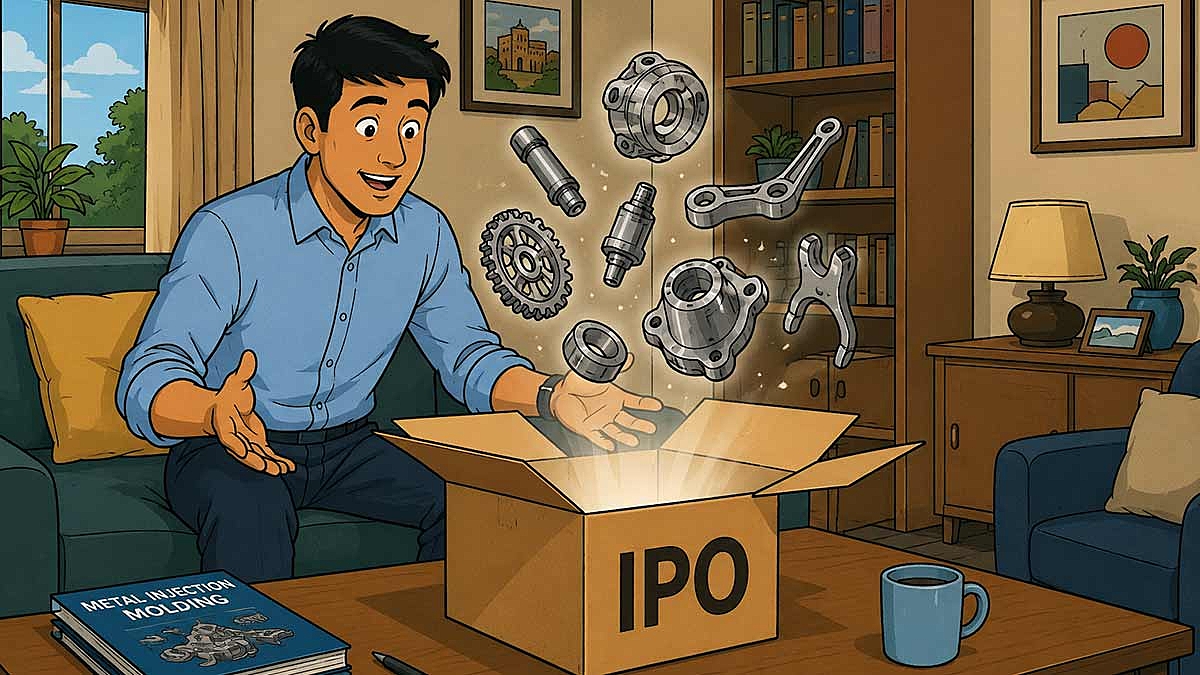
In further updates, Indo-MIM makes metal parts, but not the kind most engineering firms do. Machining, forging and casting suit larger or simpler components; Indo-MIM specialises in tiny, complex parts with tight tolerances that are hard or uneconomical to make the traditional way. It uses metal injection moulding (MIM), where fine metal powder is mixed with a binder, injected into a mould, then heated until the binder burns away and the metal fuses into a dense, finished part. MIM brings in about 58 per cent of revenue, the rest from casting, machining, powder and traded goods. The parts go to the automotive, defence, medical, consumer and aerospace industries.
On top of that, It reaches further down the chain than most rivals. Rather than buy ready-mixed feedstock, it mills its own metal powder and blends the paste itself, which lets it control exactly how each part shrinks and hardens in the furnace.
The harder part is staying in. An equipment maker usually buys a given part from one supplier, using tooling built for that part alone, after trials and audits that run two to three years. Once a supplier clears that process, switching means starting over, so customers rarely move. In FY26, 92 paise of every revenue rupee came from customers who had bought before. Indo-MIM has no order book to point to, because it works on purchase orders rather than long contracts, but that repeat rate does the same job.
Source: Value Research